Showing posts with label Alzheimer's. Show all posts

Sunday, April 3, 2022

In Home Hospice Care

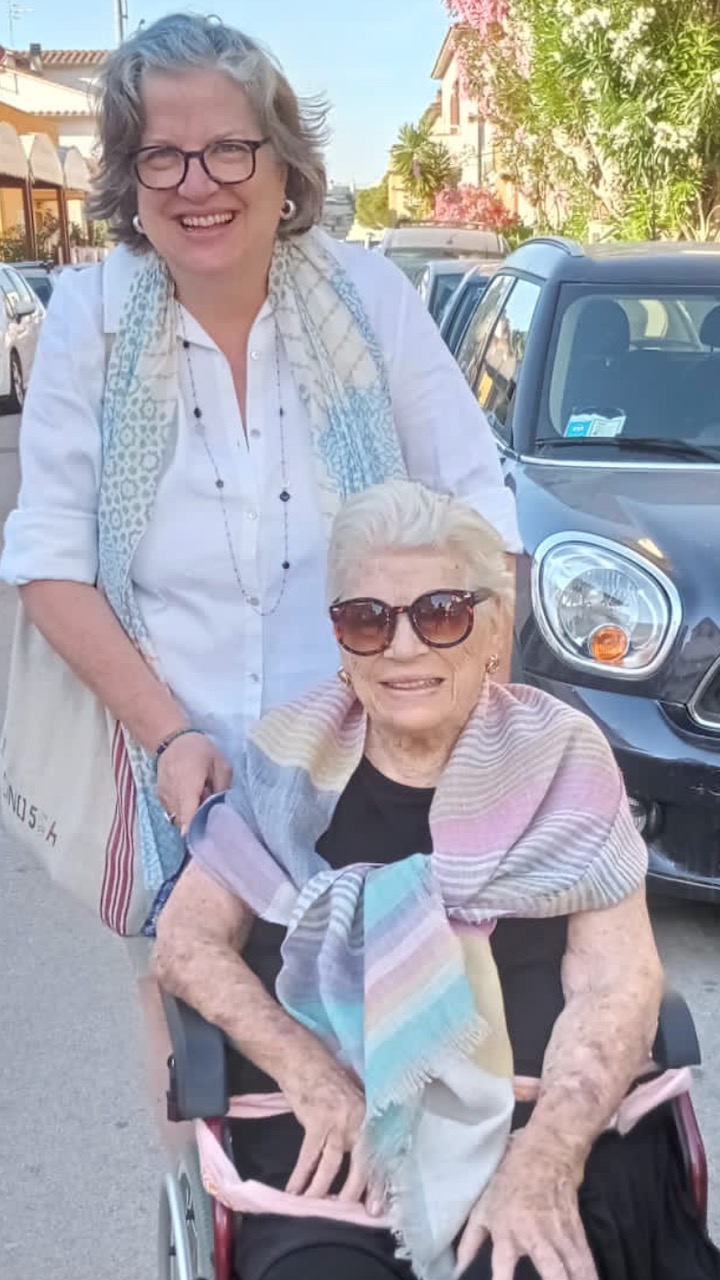
Spring is here, and Maureen continues to be remarkably stable after her hospitalization in November last year. Although she can no longer walk, she tolerates the recliner or her wheelchair for hours at a time, and still gets physical therapy regularly, and continues to surprise us with her strength, humor, tenderness, and expressiveness.

We just learned of the passing of our dear friend Hilda Steckel, who got pneumonia late in March, and as she worsened expressed her wish for palliative care only. She passed peacefully, having family all around (and grandchildren on video calls) on her terms. So despite our sadness, it is always a relief mixed with joy when a life well lived can end as the person desires.
 
Too often barriers to access of high quality palliative and hospice care remain, despite the exponential growth of hospitals with palliative care teams over the last two decades. What’s worse is that healthcare costs for dementia patients are substantially higher than for those with other serious diseases and illness, and place a large financial burden on families. The Center to Advance Palliative Care based at Mount Sinai in New York City argues that to meet the growing demand, newer models of community care in nursing homes, patients’ homes, and hospice facilities are needed.
 
Here in Rome we are remarkably blessed to be partnering with the non-profit foundation Antea, through the free Italian healthcare system, which provides us with in-home hospice care for Maureen. Right now we are having daily nurse visits, weekly doctor check-ups, and a 24-7 help line to call when needed. Antea also provided us with a hospital bed and medical and medicine supplies, which has greatly reduced the number of times I have to run to the pharmacy. Much more importantly, they are teams of experienced professionals, and treat me and my helpers as partners in Maureen’s care. It has made a world of difference to have this support.
 
Antea's facility in Rome
Antea’s story began in 1987 under leadership of an oncologist, now President Giuseppe Casale, and became a non-profit foundation two years ago. It is part of a national network for palliative care, guaranteed as a right by the 2010 law 38, and written with the assistance of Antea personnel. They describe their story as beginning with a decision to take on a responsibility “to give all our time to those who have little time left, to do our best to offer quality to those who feel abandoned. We chose to do so smiling because if palliative care is interpreted as a holistic approach and not just a simple pharmaceutical therapy, this is an extra something that Antea decided to provide.” Antea serves 150 families in total, with 25 patients in a hospice facility in the Park of Santa Maria della Pieta’ in the Monte Mario area of the city. Teams of doctors and nurses, and as needed, psychologists, physical and occupational therapists, social workers, nurse assistants, spiritual guides, volunteers, and office workers all participate in this amazing mission. 
 
The living room in our new place
Every single person we have encountered has been simply fantastic, bringing humanity and friendship to our new home. Late in January we moved across the hall to a slightly smaller apartment where we can now sleep in the same room, and it has made a huge difference for us. I no longer set the alarm for 3:30am as I have done for so long to check on Maureen, and another big improvement is that the heat actually works much better and can be regulated on individual radiators. We loved our big terrace, but in the winter it was drafty in the living room and Maureen always needed a small electric heater nearby. In this apartment the terrace was made into a veranda, and so we have even more light, the plants love it, and it makes our living room much cozier. Plus we have a working fireplace! 
 

Maureen smiling in the sun
All this to say, our days are filled with tender moments, laughter, joy, making new recipes for Maureen, and we even survived COVID in our helpers’ lives without getting it ourselves (Maureen finally got her third shot which had been scheduled for November). Right now we are recovering from colds and coughs but the antibiotics we just started are working and we’re already feeling better. I am so grateful for every single day. We are truly blessed!

Tuesday, August 24, 2021

How are we? An update.

When we moved to Rome almost four years ago, I started this blog with a series of posts about how we were settling in. I wrote about how we slept, ate, played, cheered up, and ate out. 

Since then, so much has happened. Health setbacks, health recoveries. A global pandemic. The planet healing while everything shut down and we stayed home. Vaccinations. Politics. 

In our own small world with the daily routines of caretaking and the slow steady progress of Alzheimer's Disease, we are still thriving. So here's a little update on how we're doing during these dog days of late August in 90 degree sunny weather in a mostly deserted city. 

How We Sleep

We bought portable A/C units for our bedrooms so we can keep the temperature comfortable at night, and if it gets really hot during the peak hours of the day, we retreat to my bedroom to hang out there. We put guard rails on Maureen's bed that help her get up and sit down, and prevent any falling out of bed during the night. One of these is easy to remove, so we take it with us when we go to the beach for a few nights, and that way I'm not awake all night worrying she might roll out onto the floor. We also take naps. I wake up every night around 3:30am to check on Maureen, and sometimes I need to recover that lost sleep, and Maureen often needs a late morning nap to recover lost sleep during the night (a common problem with late stage Alzheimer's). She also has Teo and her other fidget friends to keep her company if she has trouble falling back asleep.

How We Eat

The Mediterranean Diet has worked miracles for our health. This past year, with the help of my doctor, I lost 20 kilos and greatly improved the results of my bloodwork tests. I was already avoiding gluten, but now I have reduced drinking wine, having sugar (except in my coffee and once in a while in a piece of dark chocolate), and eating snacks that were not so healthy. We got a Kuvings juicer, and make delicious mixes of fruit and vegetable extractions, plus it can also make gelato from frozen fruit and yogurt. I have a lot of minestrone, and we eat more fish which I get from the outdoor market on Fridays. Alessandro sees me coming and points to the best of the daily catch, knowing I can't resist. Maureen still enjoys a hearty breakfast of a large cappuccino, yogurt, fruit, an omelette, and juice every day, and sometimes on the weekends I'll make french toast with bananas or peaches and blueberries. Her diverticulitis is under control, and we keep an eye on her anemia. Maureen needs help eating, but she holds her coffee mug with two hands and sometimes asks for a refill, and we use sturdy plastic glasses for juice or iced tea that she can hold with two hands. Her favorite thing is probably her espresso with panna after lunch. Her face lights up when she sees the little demitasse cup with a tiny handle, and she delicately holds it with thumbs and forefingers and slowly savors every sip. 

How We Play

One of the things that has kept us going these past months of lockdown is the weekly physical therapy session with Gloria, who is such a ray of sunshine and positivity. She has an uncanny intuition about what works for Maureen, and knows how to push just the right amount to persuade her to do more than she does with us during the week. We use a lot of music and singing and laughter to keep it lively, and while Maureen walks slowly with her rolling walker we sing "Daisy, Daisy, give me your answer do. I'm half crazy all for the love of you" to keep her going (well, I sing those words, and Gloria and our helpers hum along as best they can). We also watch a lot of concerts on the internet through our Medici TV subscription, and when the camera work gets up close and you feel you are right there in the performance, Maureen may even break into applause with the audience. It's not quite the same as a live show, but it's a close second. We continue to take short road trips to the beach in Tuscany, and come back rested, rejuvenated, and loaded up with Tuscan treats from our favorite places. We celebrated my 60th birthday at Le Mortelle, an Antinori winery with picturesque views and tasty plates of local produce and cheese to go with their delicious wine. 

How We Cheer Up

I never thought that weekly fresh flowers could be so important to mental well being, but our Flower Market Tuesdays have been sustaining us and our friends on social media all through the dark days of COVID and its aftermath. Our terraces are filled with flowers and plants, and we started growing hot chili peppers and little tomatoes in wooden crates in the summer. I post the arrangements of the wholesale flowers I buy on Tuesdays at the Mercato dei Fiori on Instagram and Facebook and our loyal fans get to enjoy the fun virtually. Maureen doesn't arrange the flowers anymore, but she supervises my work and if I get stuck helps me to improve. Irene has a green thumb and together with Sheeba, they make sure the plants get enough water and TLC to thrive. We love our pine trees and the birds that come and go, and the way the light changes throughout the day. Whenever we feel glum, we find an old movie (especially ones with Fred Astaire) and that usually helps pick up our spirits. 

How We Eat Out

Other than the birthday lunch at Le Mortelle, we haven't eaten out in ages. But just recently, post full vaccinations, and after a surprisingly positive eye doctor check up, we decided to go to our favorite local place, Sugo, for lunch outdoors. The head waiter, Tommaso, was so happy to see Maureen that we took another picture of the two of them (the previous one was from a few years ago). Irene had her first gricia pasta served in a pan (it's like cacio e pepe with crispy guanciale) and she took this very nice picture of me and Maureen. It was positively festive even though Maureen didn't eat much. We brought home the leftovers for dinner. 


By the way, Maureen turns 93 on August 30th, which is also the 4th year anniversary of our arrival in Rome. 


Monday, May 31, 2021

Back to school, online

I have recently had a recurring dream where I decide to enroll in a Ph.D. program. Both in the dreams, and later, upon waking, I tell myself that this is a crazy thing since I already have a Ph.D. and, at the age of 59, there is really no need for me to get another one. However, perhaps I took this recurring dream as a sign that I was eager to learn something new, or maybe it’s been the isolation of this pandemic time that spurred me to take two courses online. I suspect that my parents also influenced me in that my mother took up cello lessons in retirement, while my father took university courses in physics. 

The first was a new offering from the world of Gyrotonics and Gyrokinesis, the forms of exercise I have been doing for over four years after two decades of fidelity to Iyengar yoga. The two share similarities, although Gyrotonics involves equipment, and both require teachers to get specialized certifications in order to teach. The Gyrokinesis course was the first time headquarters offered online learning for those not already certified, and was developed by founder Juliu Horvath and master trainer Miriam Barbosa, who used Gyrokinesis breathing exercises in recovering from weeks of illness with COVID-19. The three-week course offered participants a new series of exercises for cardiovascular health and improvement. 


The second course was the first Digital Study Group offered in Italian to educators interested in the Reggio Emilia approach. The weeklong course included 4 live sessions on the Zoom platform, and a wealth of print and digital material for study and discussion. For years, Reggio Emilia hosts delegations of foreign visitors who come to learn about the renowned early childhood practices and theories that have made their municipal schools for children aged 0 to 6 famous around the world, but during the pandemic that was not possible. This digital offering was therefore a new experiment, and there were less than 50 participants. Most were based in Italy, but there were a few from other countries as well. I conducted research in Reggio for my

In 2015 I was part of a panel on Reggio schools when
The Wonder of Learning exhibit came to New York City
.


dissertation back in 2002, and have visited the municipal schools many times since, but saw this as an opportunity to update my knowledge and make new connections. 


By now most people are familiar with the mishaps and pitfalls of various digital platforms used for meetings and presentations (lawyer-cat-filter, need I say more?). As someone who has deep reservations about online learning in general, and more specifically in cases where in-person interactions are indispensable, I was pleasantly surprised by the quality of these two courses, and my own learning. In fact, it got me thinking about my current role as caretaker, and how there is ample opportunity to create online courses for caretakers that could prove to be quite popular. More on that later. 


The fitness world has been hard hit by the restrictions of the global pandemic as sporting events, gyms, pools, and so on have had to close and cancel. Fitness by video is nothing new, however, and instructors took to various platforms offering courses in streaming or through on-demand video with enticing discounts. I was lucky in that my Gyrotonics studio offered weekly options at different times and I ended up doing more exercise than I had been doing prior to the pandemic, albeit not on the Gyrotonics equipment that I used in the studio. The three week course I took was not difficult as I had familiarity with Gyrokinesis and with learning online, although the instructors did not watch participants live (some classes were prerecorded as well). However, feedback from participants meant that the classes added some details and modifications, such as moving closer to the camera to provide a better view or a different angle, and various instructors led follow up classes so participants got to experience a range of approaches. There were a few Q&A opportunities during the three weeks, and feedback was encouraged. No written materials were distributed however, and it turned out that even trainers taking the course could not use it for certification. The videos were available for a week at a time on Vimeo, which facilitated watching for those in different time zones. 


I did not practice the gyrokinesis sequences daily during the three weeks. In fact, I didn’t watch every video. My caretaking responsibilities limited my availability during the three week course. But I was a dutiful student in that I created a document with screen shots to remember the sequences and details in the instructors’ descriptions, including things like number of repetitions, breathing techniques, positions on the stool and standing, and so on. As the sequences got more complex, my ability to keep up dwindled. Still, I felt the experience was worthwhile and I still enjoy the sequences as part of my home practice. 


The course with the educators from Reggio Emilia was far more complex. For one thing, the participants ranged from beginners new to the approach, to people like me who had years of learning and observing. The designers of the course aimed for a balance of theory and practice, using slideshows with voice over narrative, video clips followed by commentary, and the sort of documentation of project-based learning they are known for. When they opened the sessions to questions, there was usually time for no more than a few before they began to comment and respond, and since some of the questions were, shall we say, thorny issues, many threads were left dangling. For example, one participant questioned how to handle the cultural context in which she was teaching, where contradictory forces of seeking new approaches while remaining chained to cultural norms that were autocratic made synchronicity with the Reggio approach nearly impossible. Participants were also curious about how Reggio teachers handled their isolation from parents and colleagues during the COVID-19 restrictions when they were accustomed to close collaborations, but there wasn’t much time for diverting from the planned agenda. 


A detail of my work
On the fourth day, the live session was dedicated to an experience with two atelier teachers. We were divided into two groups to facilitate interaction, and given a list of materials to have on hand. The idea was to have a range of “supports” and “instruments” the former being things like paper, cardboard, fabric, plastic and the latter pens, pencils, paints, charcoal, etc. An in-depth introduction gave us an appreciation for simply noticing the range of results when a support met an instrument. We generated a list of descriptive words for our supports and instruments, and then were given ample time to explore possibilities with our computers sending out images of our workspace and our hands. Instructors then invited us to share what we’d been up to, and we could see a few screens at a time during this participatory sharing. For the first time I felt I was seeing something new on the digital platform, and the instructors helped me appreciate how they were able to do this even with very young students learning from home. I had seen some similar creative approaches from the Lincoln Center Pop Up Classrooms like this one on still life drawing done by my teaching artist friend Barbara Ellmann.   


rêvolutions, 2015
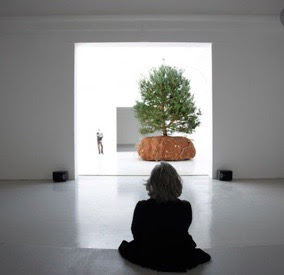
On the final day we discussed some documentation of school-based projects, including an outdoor investigation pairing trees with musical instruments made of wood. The students shared profound insights that were deeply moving to me, and as they played the strings of a cello next to a tree, plucking with stems of leaves and listening so carefully to vibrations of sound, I was reminded of artist Céleste Boursier-Mougenot at the 2015 Venice Biennale’s French Pavilion who created an elaborate installation with living trees.   


As we wrapped up our final day together, I was struck again by how these amazing educators are light years ahead in their thinking, work ethic, and ability to problem solve, and my admiration for them and the children they teach deepens each time I dive into their world. 

I still have a few weeks of access to videos and some course materials so I plan to keep on learning even though the course has come to an end. I urged the organizers to offer ways for participants to remain in touch through email (for those who welcomed it) and hope to follow up personally with new connections made during the week. 


Now, back to caregiving. In contrast, the videos I have seen online are like something from the Dark Ages. It’s almost laughable if it weren’t so pathetic. For example, here’s a well-intentioned short video on moving a patient from bed to wheelchair. Watch, then look at some of the comments.  Yes, it’s a dance all right. Even though my mother can stand and walk, the morning transfer from bed to wheelchair is far from predictable, despite a very consistent routine and verbal directions and physical cues. Let’s say you’re looking for help with something even more complicated, like showering. The Alzheimer experts at UCLA suggest you talk of “spa time” and use battery-powered candles in the bathroom (I’m not kidding). If not obvious from the comments, people are actually desperate for logistical help with these and other problems. I am part of a caregiving group on Facebook where posts asking for advice cover all sorts of topics including: 

Meals and nutrition

Medications and taking vitals regularly

Hygiene

Exercise

Safety and preventing falls

Doctors and medical testing

Handling a crisis or emergency, especially from a distance

Legal and financial issues

Support and self-care for caregivers

Mental stimulation and companionship


Any creative video production people out there want to take on this challenge? 


To end on a positive note, here is one of my solutions to a problem with sleep disturbance. I learned from a nurse (who said she had learned from a nun) that when Alzheimer’s patients develop a tight grip in one hand (in my case on the catheter tube when my mother was ill) you should give them a cloth to hold onto instead. That became one of my cat’s mouse toys, which was the perfect shape to hold in your hand and fiddle with. Then I read about fidget pillows, with tags and zippers, that keep awake patients busy at night in bed. Inspired by the fun texture of

From the top: Mimi, Teo, Thinking and Luna

microfiber dusting gloves, I started to make creatures for my mother that slowly grew into a sort of bedtime family. In addition to my handmade ones, there are smaller stuffed animals that were added to the group. Her current favorite is a baby hedgehog she named Helen, after her older sister. We make sure Helen is with her throughout the day, and this has helped ease the hand clenching problem. One morning recently, after the getting from bed to wheelchair routine was complete, I reached across the bed for Helen and handed her to my mother saying simply, “Helen.” My mother’s face lit up and she replied, “Sister.” My heart melted. 


Sunday, March 21, 2021

It's Spring

There have been many notable markings of time lately. A year since the COVID pandemic brought Italy into total lockdown, and right now most of the country is still dealing with severe restrictions on travel and returning to normalcy. We’re about halfway into the first 100 days of the Biden administration in the US, and over two million people are getting the vaccines. In Italy it’s not quite 150,000 so far. My mother has an appointment for the first Moderna vaccine in early April. Yesterday was the vernal equinox, so now we have the spring to look forward to. 

It’s also been nearly four years since I have been my mother’s caretaker full time. 
 
Given how ill she was about a year ago, I am quite relieved about her amazing recovery, and all signs point to continued good health, notwithstanding she has Alzheimer’s, weak kidneys, heart arrythmia and high blood pressure, plus asthma. 
 
There are many reasons for this miracle.

Arianna and Irene

I have a fantastic squad of female helpers, two full time, one parttime, and a marvelous physical therapist who comes once a week. Maureen and I finally have Italian health coverage, so she has had home visits from her internist, a geriatrician, a nephrologist, and most recently a cardiologist, all free. She has a private doctor who regularly comes to see her, and a private dermatologist who has also done a home visit and helps me to treat her skin cancers through email and photos when feasible. We are eating a healthy Mediterranean diet with freshly prepared meals made at home. We live in a beautiful spacious apartment with two terraces, surrounded by trees and plants and fresh flowers. We listen to music almost constantly, unless we are watching nature or cooking shows on TV. 

I get flowers weekly from
the wholesale market. 


Still, the pandemic could have easily brought me into a spiral of depression and anxiety. My life outside the home mostly consists of excursions to buy food or go to the pharmacy. I do everything I can to reduce the risk of exposure to COVID but the risk is ever present and terrifying. My broken ankle and subsequent surgery over a year ago presented a long painstaking healing process that tried my patience more times than I can count. I am often sleep deprived, which feels like having chronic jet lag. For the first time in my life, I enlisted the help of a therapist online recommended by a friend, and she made a big difference in just a few sessions. I decided to focus on my health, and found an endocrinologist who uses nutrition to heal. She helped me lose 17 kilos so far and has gotten my thyroid back into balance with a lower dose of medication. I started doing more gyrokinesis exercise online with my teacher and in my own home practice. Once my ankle was really better I started walking more. I returned to a music project with a friend in Milan and we released a fun electro swing version of Diamonds Are a Girl’s Best Friend on a compilation. Now we’re putting together a collection of swing standards that has been in the works for years. I have a home


Singing brings me joy

studio, and I bought myself a guitar for Christmas and started playing my favorite Joni Mitchell songs with a childhood friend who sends me recorded tracks to add to. I discovered Call My Agent, a superb French TV series about an agency for famous actors based in Paris, and managed to not binge watch it but to savor it in weekly episodes the way we used to watch TV. Does all this amount to self-care? Maybe. All I know is caretaking involves caring for your loved one and yourself. You have to do both.


In closing, I offer a poem. I don’t write them very often. This one just came to me.


crushing two pills

little gestures of caretaking
measure days
3:30am alarms to check on you
that I confess sometimes I ignore
only because I’m so tired I wonder 
if I remembered to set the alarm
that time I switched am and pm meds hoping it wouldn’t be too big of a problem
oof I’m no nurse
but I am brave now about things like first aid trimming hard toenails bloody noses
falling
oh then the catheter 
butt shots
you got better that time
yes I know that your brain is in decline
conversations slip away as I say I don’t know
when I mean I didn’t understand 
even though you clearly had a question that needed an answer
every morning 
every evening
crushing two pills
stirring in yogurt or applesauce


Sunday, April 5, 2020

Quarantine Daze

Grass is growing in Piazza Navona
It’s been a little more than three weeks since my last post, and now half the world has joined in the COVID19 quarantine protocol: stay home; wear a mask and gloves; wash your hands; don’t touch your face; disinfect everything. As the coronavirus hit countries in waves, so too did the harsh reality of the major disruption, despair, and sorrow it brings. Fortunately for us, Rome and its environs have been spared the devastating death toll in northern Italy, and as of today there are 2,340 positive patients; in the region of Lazio there have been 212 deaths due to coronavirus and its complications. 

Meanwhile, my mother has been making slow and steady progress in her recovery. It’s most easily measured in things like what she is able to do once a week with a physical therapist. Last week, it was managing to stand up from the wheelchair and hold onto the bed frame for as much as two minutes at a time, for a total of six times. This week, she held
Helping Maureen in PT
onto her rollator and walked several steps, first in her bedroom, then in the kitchen, also for a total of six times. This required a team of helpers that physically and emotionally supported her trajectory across the floor. She has also been using a mechanical pedaling bike out on the terrace for half an hour a day, helped by the patient nurses who guide her weaker left foot and encourage her to keep going.
Daily pedaling outside

Improvement is also noticeable in her transition from sippy cup to glass, and in the number of hours she can tolerate being out of bed either in the wheelchair or electric recliner. She’s easily managing 4-5 hours, some days even more than 6, with an hour outside in the afternoon sun on good days. 

We are fortunate that we continue to have excellent nursing care in afternoons and nights, although two of our regular nurses have been reassigned to COVID19 patients in hospitals. It breaks my heart to know they are putting themselves at risk of grave illness, but I also tell myself that those patients deserve and need the very best care to recover, and good nurses are their first line of defense in fighting the virus. 

Like others managing the quarantine, I pass the time
Yummy muffins

cooking, and even baking, and have discovered my gluten free banana chocolate chip oat muffins are quite popular with the nurses (muffins are just catching on in Italy). I got two Ottolenghi cookbooks from my sister, and with friends in California and one in New Zealand we share photos and recipe experiments in a WhatsApp group. I try to give Maureen tasty, easy to eat food, and balance her diet with fresh market vegetables, beef and chicken in small portions, and rice or potatoes. I make a fruit puree with apples, pears, ginger, honey and spices that she loves as a snack. Eating requires a lot of focus for her, as she carefully chews slowly to be sure everything in her mouth is safe to swallow, and sometimes if her eyes close and she gets sleepy she needs to be reminded to stay awake and alert. I leave much of the task of feeding her to my helpers as I’m usually still in the kitchen working on meal preparation. So far she has had minimal digestive issues and all her tests point to no more problems with diverticulitis or bleeding. I still make sure she has a daily probiotic VSL3 mixed in her morning brew with aloe and fresh orange juice.

For me one of the most remarkable things is that all of her medication with the exception of her asthma inhalers has changed. In addition to stopping the Alzheimer medications of donepezil and memantine, she is not taking previous blood pressure medications or montelukast for asthma. She takes a daily diuretic, Lasix, a beta blocker for her heart, an anticoagulant, and a blood pressure medicine. Her kidney function has improved, her blood pressure is stable, and her heart and lungs are working fine. There has been some notable decline in terms of Alzheimer’s symptoms, but some improvements as well, so it’s hard to say what will be the lasting effect of both her health trauma and suspending the two medications. To help her sleep, and to calm the agitation she experiences in the middle of the night, we use a low dose of Lexotan (we tried Xanax, but it didn’t work) in combination with natural sleep aids valerian and melatonin. 
Mimi helps me with my ankle magnet therapy,
now dubbed Mimimagnetoterapia

Like others looking for creative ways to pass the time at home, we listen to a lot of different music throughout the day: Yo-Yo Ma’s Bach recording;  Frank Sinatra from the late 40s-early 50s with the swinging Harry James Orchestra; Ella Fitzgerald’s live concert in Rome recording; Morabeza, a new recording by Italian singer Tosca (and we have tickets to hear her live in Rome in mid-May); in the evening to wind down, Stan Getz, Bill Evans, or Oscar Peterson. We also tried a collage activity exploring concepts of isolated, tangential, and overlapping led online by our artist and teacher friend Barbara Ellmann, offered through Lincoln Center’s education program, and hung our collages
My collage had a Roman theme

on the wall across from Maureen’s bed. We avoid the news now, and prefer concerts or classic films, limiting TV watching to less than an hour or two a day. There’s always daily chores and now we’re starting some spring cleaning and closet reorganization projects too. 

I know I am blessed to be spared the common hardships of the quarantine in that I don’t have to work from home and schedule online meetings or classes, I don’t have to homeschool any children, I am not ill, and I can get whatever food and medicine we need with relatively little effort and low risk of infection. Even my gyrotonics teacher is offering free classes through Skype, so I’m getting my weekly exercise. But I am blessed in another way, that fellow caretakers will probably recognize. I am used to this feeling of staying close to home, attending to domestic chores, slowly feeling the passing of time, because my mother is my number one priority. It’s been three years. I can handle whatever quarantine time is still to come. Every day with Maureen is precious. 

Friday, March 13, 2020

Life During Wartime

“This ain’t no party, this ain’t no disco, this ain’t no fooling around” – Talking Heads


If you are one of those people who still thinks the COVID-19 virus is unlikely to change your life, think again. We are witnessing the worst-case scenario of a global war against a highly contagious virus that requires all of us to do our part to contain its spread, particularly to the most vulnerable among us. Here in Italy as of today there are more than 15,000 known cases of the Corona virus, 11,000 of which happened just last week. 
From New York Times March 13, 2020

Hospitals in the north where the spread began are overwhelmed, desperately seeking to create intensive care beds for the overflow of dying patients. This New York Times piece (no paywall on Corona news) provides a grim glimpse into the future scenarios likely to expand globally.


Italy has now taken the most drastic measure of putting the country on pause – no school, no work, no play – and is using celebrities and doctors to spread the #IoRestoACasa message that staying put, in the safety of one’s home, is the best way to contain the spread of disease. Now only supermarkets and smaller food stores plus pharmacies are open, and you have to wait your turn to get in. When I ventured out to the pharmacy yesterday, there were about ten people waiting not in line, but with the required meters between them, each new arrival confirming who was the last person so as to keep track of turns. This sort of civility is rare in Italy where cutting in line, especially at airports, is more the norm. Masks and gloves are everywhere, and supplies of hand sanitizer seem to have run out.

Against this surreal backdrop, my life as a caregiver goes on with the daily joys of watching my mother get better and better with each day. Even her bloodwork yesterday shows dramatic improvements in the worrisome numbers. When we first got the hammock-like lifting machine to transfer her from bed to reclining electric armchair, she actually loved the whole experience, and stayed in the chair for 30 minutes. Just yesterday she stayed for three full hours, eating dinner in the chair, and during her physical therapy session managing to stand three times holding on to the bed frame while we supported her on either side. For the first time we saw her move her feet on her own, taking little steps as we pushed the armchair into position, and turning her ankles in circles to stretch the muscles. This morning I left her room for a few minutes and returned to find her sitting up, legs hanging down the side of the bed, torso up, with only the yoga belt barrier I put in place as support for her hands. She is ready to, as she says, “get out of here.”

Also remarkable is the dramatic difference between her speech when she is lying in bed compared to when she’s sitting up in the chair. Moans and groans turn into full-blown phrases of thoughts her brain has been likely storing up for eventual use. Her physical therapist recommended putting
Maureen loves the armchair
objects she enjoys out on a table in front of her, so I got out her box of costume jewelry necklaces and bracelets, and she reached forward with delight, holding each one as we talked with her and had much more meaningful social interaction than when we are leaning over her in bed, taking her blood pressure or helping her to eat and drink something.


I shudder to think how all of this would have been different if we had decided to put her in an ambulance and take her to the Umberto I hospital when she first had the crisis after her colonoscopy and endoscopy hospitalization. I doubt she could have survived. Alzheimer’s patients are particularly prone to terrible disorientation and panic attacks in hospital settings, and she would have increased her risk of exposure to germs, bacteria, and of course, the COVID-19 virus. With her weakened lungs and heart, she wouldn’t have had a chance.

So please, take this pandemic seriously. For you, for your loved ones, and for those who are most vulnerable. They need you.

Sunday, March 1, 2020

Nursing Back to Health

Nurses, like teachers, are some of the hardest working, underpaid, under appreciated professionals and they are on the front lines of health care with the most direct contact with patients. Here in Rome, just as in New York, they come from countries across the globe, many hoping to earn enough to help family members they left behind. Their hours and shifts are crazy, well beyond a straight 12 hours, and often requiring being awake all night.


My mother came home from the hospital on February 13th, and all was going pretty well until a few days later when she became bedridden. Her doctor came for a visit when a nurse was here and they determined she needed a catheter, so I raced to the open pharmacy to get supplies and after a tortuous few minutes it was in and there were within minutes two full liters of urine filling up the bag. Apparently the bloating resulting from the endoscopy and colonoscopy perhaps coupled with side effects of anesthesia caused her bladder to back up, which might also explain her high creatinine level above 3. It was touch and go for the next several days, requiring sleepless nights, gas pain, difficulty breathing, anxiety and delirium. I feel as though I have jet lag from a trip to Los Angeles for about two weeks now, and I am definitely feeling that I am too old for this.

I have learned a lot about nursing and caring for an elderly bedridden patient in the past weeks. The doctor has been in constant contact through messages and took a one-problem-at-a-time approach, so first we worked to stabilize lung edema issues using intervals of oxygen, the diuretic drug Lasix, and extra inhalers beyond the ones my mother usually has for asthma. Then once her breathing improved, we shifted our focus to her heart, slightly modifying the medication regime (she had still suspended many of her previous medications) and taking her blood pressure regularly. I kept charts of all the data including what she ate and drank and anything else noteworthy. Once I became incapacitated by sleep deprivation, I hired night nurses so that even though I woke up regularly anyway, I was sleeping in my bed more than I had been in the makeshift one next to my mother.

This all paid off and slowly but surely, we turned a corner and she seemed out of immediate danger. Her bloodwork numbers were going in the right direction. We had avoided an ambulance and hospitalization through teamwork and good communication, and Maureen’s ability to fight the impulse to give up. Every day she ate more, gained strength, was more present and herself, giving sweet hand caresses to the faces of those caring for her, winking, smiling, sometimes even singing. Frank Sinatra is an excellent healer. There were also battles to move her body, when she would threaten with fists clenched, “I’ll kill you!” but once in a comfortable position she settled right back down.

I worked in the kitchen and in my shopping to make smooth, easy food taste good, while following dietary guidelines for kidney problems and diverticulitis. Squash, carrot, and sweet potato soup. Omelets with cheddar cheese. Lemon flavored meatballs. Juice mixes with the sweetest fresh oranges and pure aloe plus her usual morning probiotic. Hot Irish tea with milk and sugar. Creamy yogurt in her favorite flavors. Cooked pears and apples pureed with banana. Lots and lots of zucchini minus seeds drowning in delicious olive oil. Thank God for soft sippy cups that made drinking in the inclined hospital bed we rented possible with little mess.

Finally, four days ago, my warm and creative physical therapist agreed to work with Maureen and see if we could get her to sit up on the edge of the bed with her feet down. Since it was close to our regular happy hour time, I told her she could even enjoy a few sips of wine if she’d try to do it, and we put on some upbeat jazz music. We slowly progressed from massage, to movement, to pillow readjustments, to a three-person (assisted by the nurse moving pillows) maneuver that slid her into position with an armchair pillow rest cradling her back. For the first time in over a week she had a different perspective out her bedroom window, and she seemed surprised to see it. I gave her the promised sips of wine, I cried, composed myself, took a picture to send my sister, and just marveled at what all that hard work had produced.

In addition to learning to do belly injections the right way with no pain and no black and blue mark, to change a really messy diaper (double gloves!) without taking forever, to treat bed sores (a rotation of three products seems to work best) and foot blisters, to get creative with pillows of all shapes and sizes, to administer oxygen with a patient determined to remove it, to change and reposition my mother all by myself (THAT was hard but now I’m a pro), to manage a catheter, and to not lose my patience every time I had to get back up just after falling asleep (I really understand those new mothers who look at their newborns in exasperation), I learned that I had to also administer some self-care. I thought about that airplane safety rule about putting on your oxygen mask before helping someone beside you. So I returned to doing my gyrotonic exercise hour with my teacher, crying with joy at my ability to do the familiar movements after my ankle surgery. I made a point of shopping at my favorite market, and chatting as I always do with the vendors I have befriended who make this chore so pleasant. I didn’t try to do everything, and trusted that Irene and Arianna were perfectly capable of being in charge of things too. I took time to make myself some comfort food, to watch my favorite Italian show, to even have my weekend martini.

And finally, blissfully, I got some badly needed sleep.

Saturday, February 15, 2020

Hospitalization and Frailty

Maureen in the afternoon sun

Aside from the two times she gave birth, my mother has never had to stay in a hospital. She has had cataract surgery, Mohs surgery for skin cancers, and she has been treated in an emergency room and in an urgent care facility, but as of this week, she has never been hospitalized overnight for illness. Now that she has Alzheimer’s, I have dreaded the possibility of having to either call an ambulance, or admit her to a hospital, as I feared the resulting anxiety and disorientation would be more debilitating than whatever affliction might befall her. So last weekend when she began to have serious rectal bleeding, I made a round of phone calls and found that my anesthesia doctor from my recent ankle surgery was also practicing geriatric medicine and could do a house call that same afternoon. Imagine that! 

He immediately had me suspend four of her medications. Two were her Alzheimer’s medications, donepezil and memantine, here in Italy known as Aricept and Ebixa. For some time I had suspected they were doing more damage than good. In fact I recently read that memantine and donepezil should not be taken together, and not by patients with heart conditions. My mother has both high blood pressure and a heart arrhythmia. Donepezil is also bad for people with asthma, which my mother has had all her life. The other drug was warfarin, which thins the blood to presumably prevent strokes and heart attacks, but it carries a risky potential for causing internal bleeding. We agreed that hospitalization was not yet necessary, and might make matters worse for her. When her symptoms persisted the next day, he had her admitted to a private hospital not far from where we live.

Her hemoglobin was dangerously low, so she was given blood and plasma transfusions in order to prepare her for a diagnostic endoscopy and colonoscopy the following day. Thankfully with the help of some fantastic nurses, I got her through the prep and we had generally good news from the procedures: no tumors, no hemorrhoids, no need for any surgery. However, she had diverticulitis, and the working hypothesis was that her worsening anemia coupled with the impact of that cocktail of medications caused internal bleeding that eventually led to the hemorrhaging. Luckily a careful diet can help the intestinal healing, and now we will work to figure out how to improve her heart and lung health. 

I imagine readers of this blog are well aware of the dubious results of these two widely prescribed Alzheimer’s medications, and of the many undesirable side effects. Dr. Dale Bredesen whose work I have previously written about, posted on his Facebook page about a year ago about a meta analysis:
a recent study showed that patients treated with standard Alzheimer’s drugs donepezil (Aricept) or memantine (Namenda) actually declined more rapidly than those who were not treated with those drugs (Kennedy et al., JAMA Network Open. 2018;1(7):e184080. doi:10.1001/jamanetworkopen.2018.4080

What may be less understood by caretakers and even medical professionals is how the frailty of old age can mean unseen vulnerability that is not diagnosed with typical bloodwork and routine doctor visits. I think of myself as a pretty well-informed caretaker, someone who has done a lot of reading about Alzheimer’s, but I did not go to medical school, so I put a great deal of trust in doctors. When I saw symptoms like nighttime coughing, complaints of feeling cold, rising creatinine levels, increased sleepiness, breathlessness with fatigue, I did not pursue the possible reasons, even though I wondered about the medicines that negatively impacted kidney function. My mother’s doctor most recently diagnosed a flair up of asthma and prescribed prednisone, and it reassured me the chest x-ray showed no change from the previous one and therefore she felt the heart was not to blame for her symptoms. In retrospect, I am shocked that a simple online search turned up the fact that iron-deficiency anemia (which my mother has been taking iron supplements for since late fall) is almost always due to blood loss, and a simple test can determine if there is blood in the stomach or bowels. 

Lessons learned the hard way always leave a residue of guilt. I am grateful for the happy outcome of the procedure, for a trustworthy and competent doctor and his colleagues at the hospital, and for a mother who is a stubborn warrior and even in her most distressed state was willing to fight through it. I am more skeptical than before all this happened about the medical establishment, which seems even more dysfunctional than the really messed up field of education that has been my life's work. I see disturbing parallels. We know from replicable and reliable research that these medications are not working and are even dangerous, yet millions continue to take them in the hope they'll do something for their loved ones. We know that the toxic testing culture taking over educational settings is not improving learning outcomes and is actually harmful to students and teachers, yet we persist in ranking, sorting, praising and publicly humiliating people. We have a long way to go. We're not getting younger, and most of us are not getting healthier. Or for that matter, smarter. 

Saturday, December 28, 2019

When the Caretaker Needs Care

Yes, that's my left foot.


About two weeks ago, after a lovely visit with friends and hot chocolate with whipped cream in a coffee bar, I slipped in dog shit and broke my left ankle. I was alone, in the dark, on a wide street with no other pedestrians around to notice my predicament. My high tolerance for pain enabled me to get up, walk two blocks to my car (stopping at a street fountain to wash the shit off my hand) and drive home using the clutch. Thinking it was only sprained, I wrapped the ankle, took some Advil, and had a bit of wine.

Three days later I realized I needed x-rays, and they revealed broken bones on the inside and outside of my ankle, requiring surgery. I knew I was going to have to pay for private service since I don’t have Italian health care set up yet (and probably would not do this sort of surgery in a public hospital anyway) but I needed to get it done quickly and with a minimal hospital stay. Luckily our doctor’s office came to the rescue with a very experienced American orthopedic surgeon specialized in hand and foot surgery and she got me into a private Catholic hospital close to home. I had
After surgery
the surgery the next day and spent only that night in the hospital. In another few days I get to switch from a cast to a boot and my healing is progressing nicely so far, plus I’m down to only using Advil for pain. Big sigh of relief, right?

Not quite. If I didn’t have two fantastic women who help me manage things at home, who know and understand my mother and her needs, and who were willing to take turns staying overnight so we had constant coverage, I don’t know what I would have done. In part you just don’t realize how much you do as a caretaker until you can’t do it anymore. You cannot even take something out of the fridge and get it to the counter when you have to walk with crutches.

For some time my mother had refused to let me order her a rolling walker with a seat for when she was tired of pushing it around. Now I realized I had to get one as I couldn’t risk her falling, and I decided I also needed a stool with wheels to roll around, at least in the kitchen. I also went online to buy cat litter, and stock up on grocery items that are heavy to carry. We tried ordering home
Better stick with Italian food.
delivery from a local restaurant for the first time and were disappointed by mediocre poke bowls. Our helpers managed all the rest and so we got through these two weeks with only one slow-motion late night fall as my mother was heading to bed.

We also had our Roman friends come to the rescue with a Sunday afternoon visit and a Christmas lunch feast, picking up our spirits considerably. My sister and her family cheered us on through FaceTime calls and it made them not seem so far away. Even though my mother would regularly forget what had happened to me, she started to catch on when she would see the cast on my foot, and her patience and concern has been of great comfort.

Now that I am facing the grim reality of not being able to drive or walk without crutches for weeks, not to mention months of physical therapy, I realize that the hard part is probably yet to come. I don’t know what it will be like for us to be constantly in each other’s company at home, to not go out to eat, or just for a drive or an errand. We’ll have to take taxis for important things like doctor appointments and blood tests (coming up in January) and I guess just learn to manage as best we can.

The research on the toll caretaking takes suggests that it’s not enough to carve out a bit of down time, to relax and take a break. I thought my twice weekly gyrotonic exercise classes were my sanctuary, keeping me fit in body and mind. I learned to do more than errands while my helpers were with my mother, to go for walks, to see an exhibit, or shopping. I was even plotting to take my laptop to a café one afternoon and work on the young adult novel I am writing, which seemed truly luxurious. For now, that will all have to wait. I have to focus on healing, and getting through the tough weeks ahead.